"Shri Rang Energy Efficient" is a leading trader and supplier of standard motors, gear motors, reduction gear box, flame proof motor, electric motor, cooling tower motor and single phase electric motors.
Packaging requires precision, efficiency and reliability so industrial machinery based on motors like bbl motors is needed. In this article we discuss the different types of bharat bijlee motors, their features, and important applications in packaging.
From driving conveyors to powering filling machines, these motors ensure seamless operations. We’ll also highlight the latest industry trends and data relevant to businesses looking to optimise packaging processes.
Motors are the backbone of the packaging industry, driving equipment that handles everything from raw material processing to final product sealing.
The bbl motor, manufactured by Bharat Bijlee, stands out for its durability and efficiency. In packaging motors must produce consistent torque, operate in variable loads and operate in harsh conditions.
These challenges are met by Bharat Bijlee electric motors that happen to be energy efficient and low-cost to operate.
Since 1946, Bharat Bijlee is a name synonymous with electrical engineering, producing a large variety of bbl motors for packaging applications.
These motors have high efficiency, adaptability and durability for conveyors, filling devices & sealing machines. Below we describe the primary types of Bharat Bijlee electric motors and customized applications in the packaging industry.
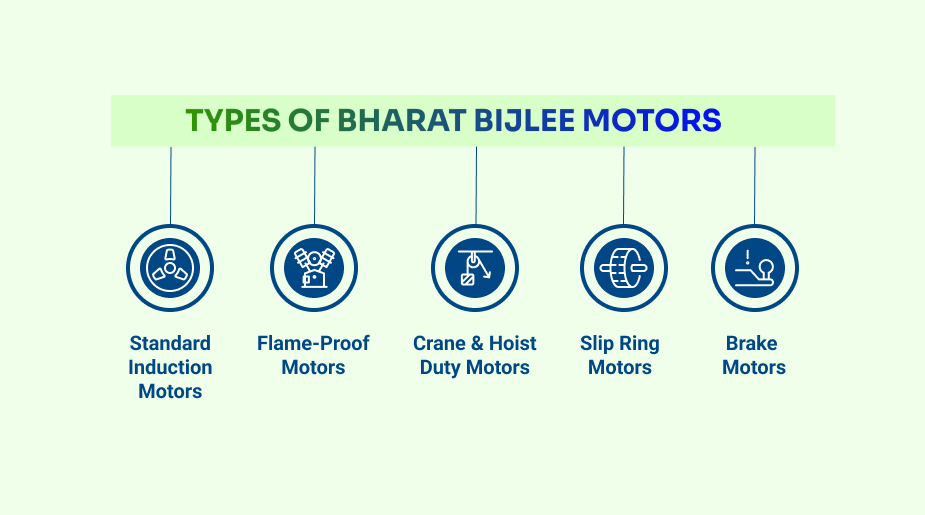
The Standard induction motors are among the most reliable and cheapest of the bbl motor lineup. These three-phase motors are available in power rating from 0.12 kW up to 355 kW and in higher capacities up to 1250 kW on request. They’re available in IE2 High Efficiency and IE3 Premium Efficiency classes based on world energy standards.
Technical Specifications:
Applications in Packaging:
Also, read on Why Choose Bharat Bijlee Motors for Industrial Automation?
Flame-proof BBL Motors are designed for hazardous environments such as chemical or aerosol packaging. These motors are certified for Zone 1 and Zone 2, meet IS/IEC requirements for gas groups IIA, IIB and IIC and come in 0.37 kW to 315 kW versions.
Technical Specifications:
Applications in Packaging:
Duty cycles, providing higher starting torque along with exactness for applications requiring frequent start/stop. These motors are available up to 400 kw and therefore are perfect for material handling at packaging warehouses.
Technical Specifications:
Applications in Packaging:
Slip ring BBL motors are suitable for high inertia applications with high starting torque. These motors, available up to 1000 kW, have external rotor resistance with low mechanical stress for smooth acceleration and speed control.
Technical Specifications:
Applications in Packaging:
Brake motors from Bharat Bijlee include an electromagnetic brake for fast stopping safety & precision. They are available up to 22 kW motors and are suitable for dynamic packaging applications requiring accurate positioning.
Technical Specifications:
Applications in Packaging:
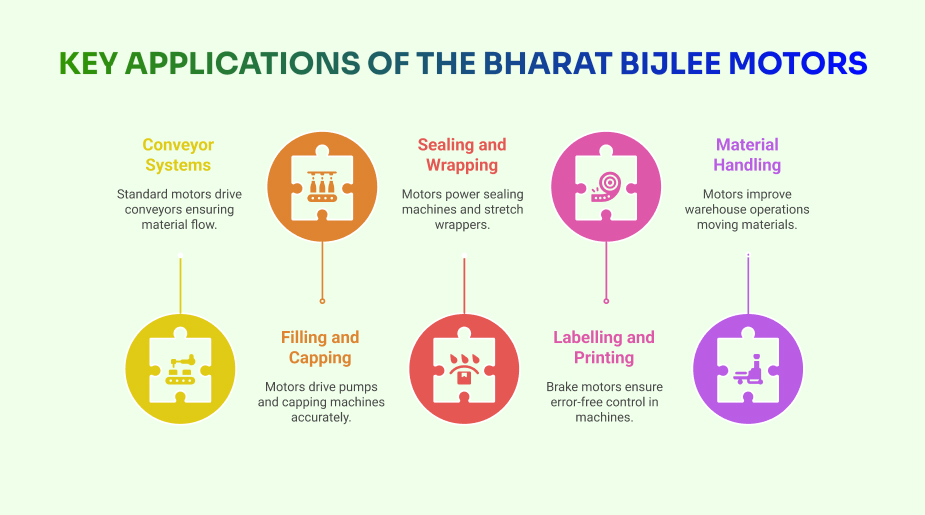
This article reviewed the different types of BBL Motor – standard induction, flame-proof, crane and hoist duty, slip ring and brake motors with their applications in the packaging industry. Bharat Bijlee electric motors drive conveyors and labelling precision.
At Shrirang Energy Efficient, we are a leading bbl motor dealers providing Bharat Bijlee motors for your packaging needs. We help you upgrade equipment or build a new facility and can provide advice and solutions. Check out our range & improve your operations with proven motor technology.
Frequently Asked Questions(FAQs):
Q1. Where are Bharat Bijlee Motors commonly used in industries?
A. Bharat Bijlee Motors are widely used in textiles, cement, steel, and HVAC industries for reliable and energy-efficient operations.
Q2. How energy efficient are Bharat Bijlee Motors compared to others?
A. Bharat Bijlee Motors meet premium efficiency standards, reducing power consumption and operational costs in long-term industrial use.
Q3. Are Bharat Bijlee Motors suitable for high-temperature environments?
A. Yes, BBL offers flame-proof motors certified for safe operation in hazardous, high-heat, or explosive industrial conditions.

Author
Smit Patel is a visionary leader in the field of industrial motors, gearboxes, drives, and switchgear. With a strong focus on innovation and energy efficiency, he is dedicated to delivering high-quality, reliable solutions tailored to meet diverse industrial needs. His expertise ensures clients receive exceptional products and services that drive performance and sustainability across sectors in India.