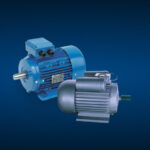
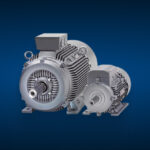
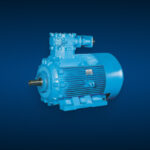
"Shri Rang Energy Efficient" is a leading trader and supplier of standard motors, gear motors, reduction gear box, flame proof motor, electric motor, cooling tower motor and single phase electric motors.
For industries requiring efficient and reliable solutions, three-phase motors offer unmatched advantages in low-power applications under 5 kW.
This article discusses the types of three-phase induction motor, types of three-phase induction motor like three-phase squirrel cage induction motor and five benefits.
Energy efficiency, reliability, economic, smooth operation and compact design. Let’s uncover why these motors excel in manufacturing and oil and gas for your operations.
A three-phase induction motor uses three alternating currents offset by 120 degrees to create a rotating magnetic field.
This field creates current in the rotor and produces torque without brushes or direct connections.
It is a simple self-starting design suitable for industrial low-power applications like small pumps or fans. In small operations, this means fewer components and less downtime.

To choose the right motor, you need to know the types of three-phase induction motor:
Squirrel cage motors dominate the market due to their affordability and versatility in small industrial setups.

We go over five benefits that make them a good fit for many industries, including manufacturing and oil and gas.
Energy costs are a major concern for businesses, and three-phase motors can save you money.
These achieve 85-90% efficiency versus 70-80% for single-phase motors. This would mean 15-20% lower utility bills for a 2 kW pump in a manufacturing plant, being very cost-effective per year.
This efficiency makes three-phase motors a good choice for economical operations.
In demanding environments, reliability is essential. The three-phase squirrel cage induction motors are built tough with brushless designs and IP55 protection against dust & water. They handle heat and overloads, reducing failures by 30% in industrial settings.
This durability provides uptime, which is critical for small-scale operations where downtime can cost thousands.
The three-phase motors are more expensive in the beginning but save money Over Time. By using fewer conductors than single-phase systems, simpler wiring cuts installation costs by 25%.
These factors make three-phase motors a low-power option.
Typical three-phase motors have Smooth Operation and Low Vibration. They have constant torque delivered by three-phase power supplies compared to single-phase motors. This protects equipment and increases workplace safety.
In manufacturing, this smoothness reduces wear and disruptions.
Space is often tight in industrial setups, and three-phase motors are a compact solution. They offer greater power output per unit than single-phase motors and are therefore suitable for tight spaces in oil and gas or manufacturing facilities.
This compactness gives businesses space without losing power.
In low-power applications, three three-phase motors outperform single-phase options:

Three-phase induction motors are explained, starting from what a three-phase induction motor is, to the types of three-phase induction motor, like the three-phase squirrel cage induction motor used in manufacturing, as well as oil and gas.
Shrirang Enterprise has seen three-phase motors as energy efficient, reliable, economical and compact in low power applications.
Ready to improve your operation? Since 2005, we have been the authorised dealers of ABB, Siemens & Bharat Bijlee in Ahmedabad, providing 3-phase motor solutions. Call Shrirang Enterprise today for professional help & reliable motors to drive your success
Frequently asked questions
Q1. What is a three-phase induction motor?
A. The three-phase induction motor uses three alternating currents, 120° apart, to create a rotating magnetic field that generates torque without brushes.
Q2. What are the main types of three-phase induction motors?
A. The main types are squirrel cage induction motors, wound rotor induction motors, and synchronous motors.
Q3. Why are three-phase motors more efficient than single-phase motors?
A. They deliver higher efficiency (85–90%), use less energy, and provide steady torque, reducing energy costs by up to 20% in low-power applications.

Author
Smit Patel is a visionary leader in the field of industrial motors, gearboxes, drives, and switchgear. With a strong focus on innovation and energy efficiency, he is dedicated to delivering high-quality, reliable solutions tailored to meet diverse industrial needs. His expertise ensures clients receive exceptional products and services that drive performance and sustainability across sectors in India.